In today’s digital age, staying anonymous online is becoming increasingly difficult. Every website you visit, every search you make, and every app you use collects some form of your personal data.
From advertisers to hackers, many entities are constantly tracking your online behavior. That’s why learning how to stay anonymous online is no longer optional — it is essential.
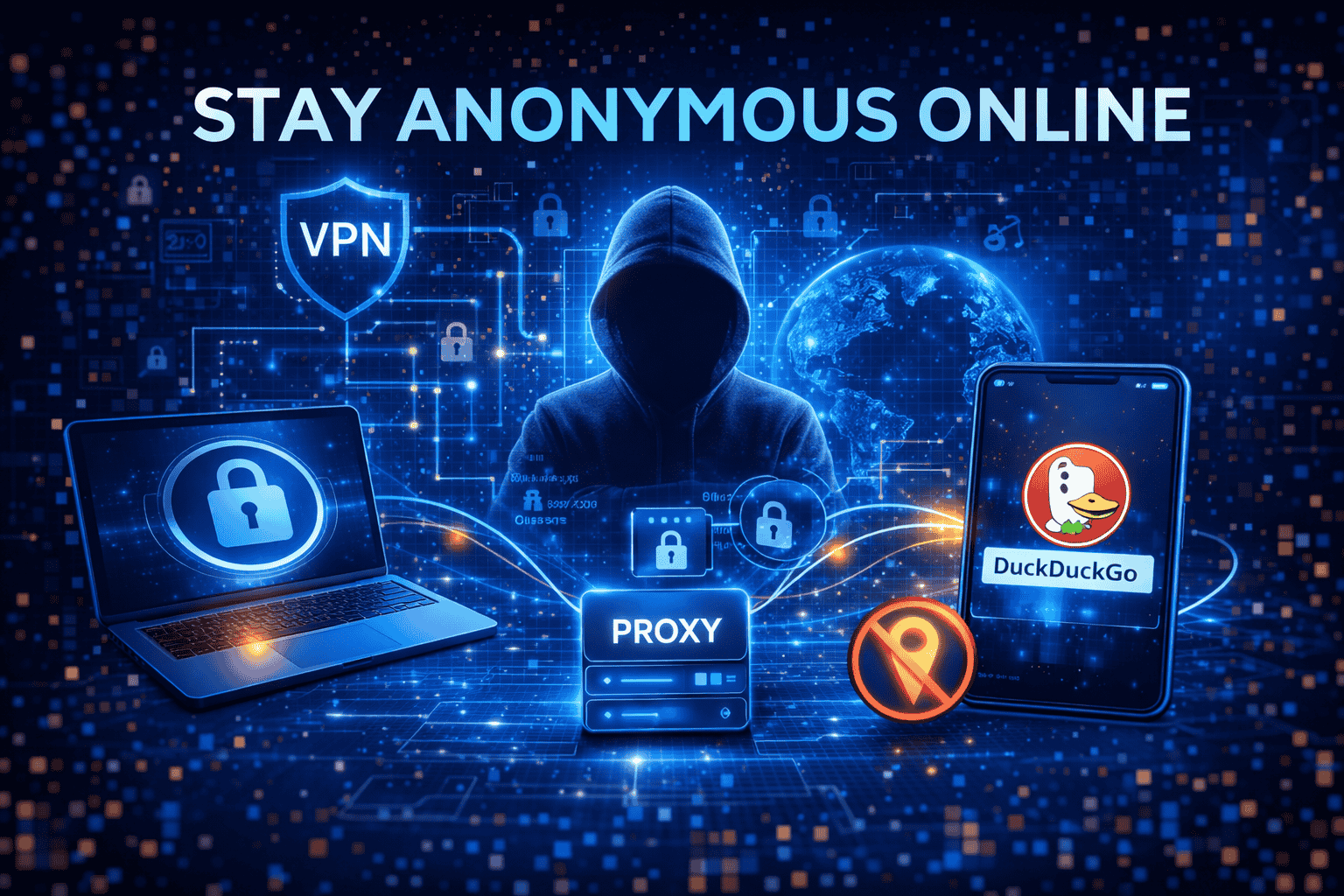
Stay Anonymous Online
In this guide, we will explore practical and powerful ways to protect your identity and maintain privacy while browsing the internet in 2026.
Why Online Anonymity Matters
Most people think privacy is only for those who have something to hide. But in reality, your personal data is valuable.Stay Anonymous Online
Online anonymity helps you:
- Protect personal information
- Avoid tracking and profiling
- Prevent identity theft
- Access restricted content safely
- Maintain digital freedom
Without privacy, your browsing habits can be monitored and used against you.
What Does “Anonymous Online” Really Mean?
Being anonymous online means hiding your real identity while using the internet.
This includes:
- Hiding your IP address
- Protecting your location
- Preventing tracking cookies
- Avoiding data collection
True anonymity is difficult, but you can significantly improve your privacy with the right tools.
1. Use a VPN (Virtual Private Network)
A VPN is one of the most powerful tools for online anonymity. Stay Anonymous Online
It works by:
- Hiding your real IP address
- Encrypting your internet traffic
- Masking your location
Benefits:
- Safe browsing on public WiFi
- Access geo-blocked content
- Protection from hackers
2. Use Privacy-Focused Browsers
Some browsers are designed to protect your privacy.
Stay Anonymous Online
They block:
- Trackers
- Ads
- Fingerprinting scripts
Examples:
- Brave Browser
- Tor Browser
These browsers provide better anonymity compared to regular ones.
3. Disable Cookies and Trackers
Cookies are used to track your online behavior.
To reduce tracking:
- Block third-party cookies
- Use private browsing mode
- Clear cookies regularly
This prevents websites from building your profile.
4. Use Proxy Servers
Proxy servers hide your IP address by acting as a middle layer.
They help:
- Access restricted content
- Improve anonymity
- Hide your identity
However, proxies are less secure than VPNs.
5. Avoid Public WiFi Risks
Public WiFi is not safe for private browsing.
Risks include:
- Data interception
- Man-in-the-middle attacks
- Password theft
Always use VPN or mobile data for secure browsing.
6. Use Secure Search Engines
Search engines track your queries and behavior.
Privacy-focused alternatives:
- DuckDuckGo
- Startpage
They do not store your search history.
7. Be Careful What You Share Online
Stay Anonymous Online
The biggest privacy risk is often user behavior.
Avoid sharing:
- Personal details
- Location info
- Sensitive data
Always think before posting anything online.
Common Mistakes That Break Anonymity
Even with tools, users make mistakes.
Avoid:
- Logging into personal accounts while using VPN
- Clicking suspicious links
- Using weak passwords
- Installing unknown apps
Small mistakes can expose your identity.
Advanced Tips for Maximum Privacy
Stay Anonymous Online
For higher-level anonymity:
- Use Tor network
- Enable firewall protection
- Use encrypted messaging apps
- Regularly update software
Combining tools gives better protection.
Is Complete Anonymity Possible?
In reality, complete anonymity is very difficult.
However, you can:
- Minimize tracking
- Protect sensitive data
- Stay mostly anonymous
- Stay Anonymous Online
The goal is not perfection, but better protection.
Final Thoughts
Staying anonymous online in 2026 requires awareness, tools, and smart habits. As technology evolves, so do tracking methods.
By using VPNs, secure browsers, and privacy-focused tools, you can take control of your digital identity and browse the internet safely.
Remember — your privacy is your responsibility.