Introduction
In today’s digital world, online privacy and internet security have become major concerns for users. Many people want to browse safely, protect their personal data, and access restricted content without exposing their identity. This is where tools like proxy servers and VPNs come into play.
If you are confused about the difference between a proxy and a VPN, you are not alone. Beginners often assume that both technologies work the same way. However, there are important differences in how they function, their security levels, and their overall benefits.
In this guide, you will learn what proxy servers and VPNs are, how they work, and which one you should choose based on your needs.
What is a Proxy Server?
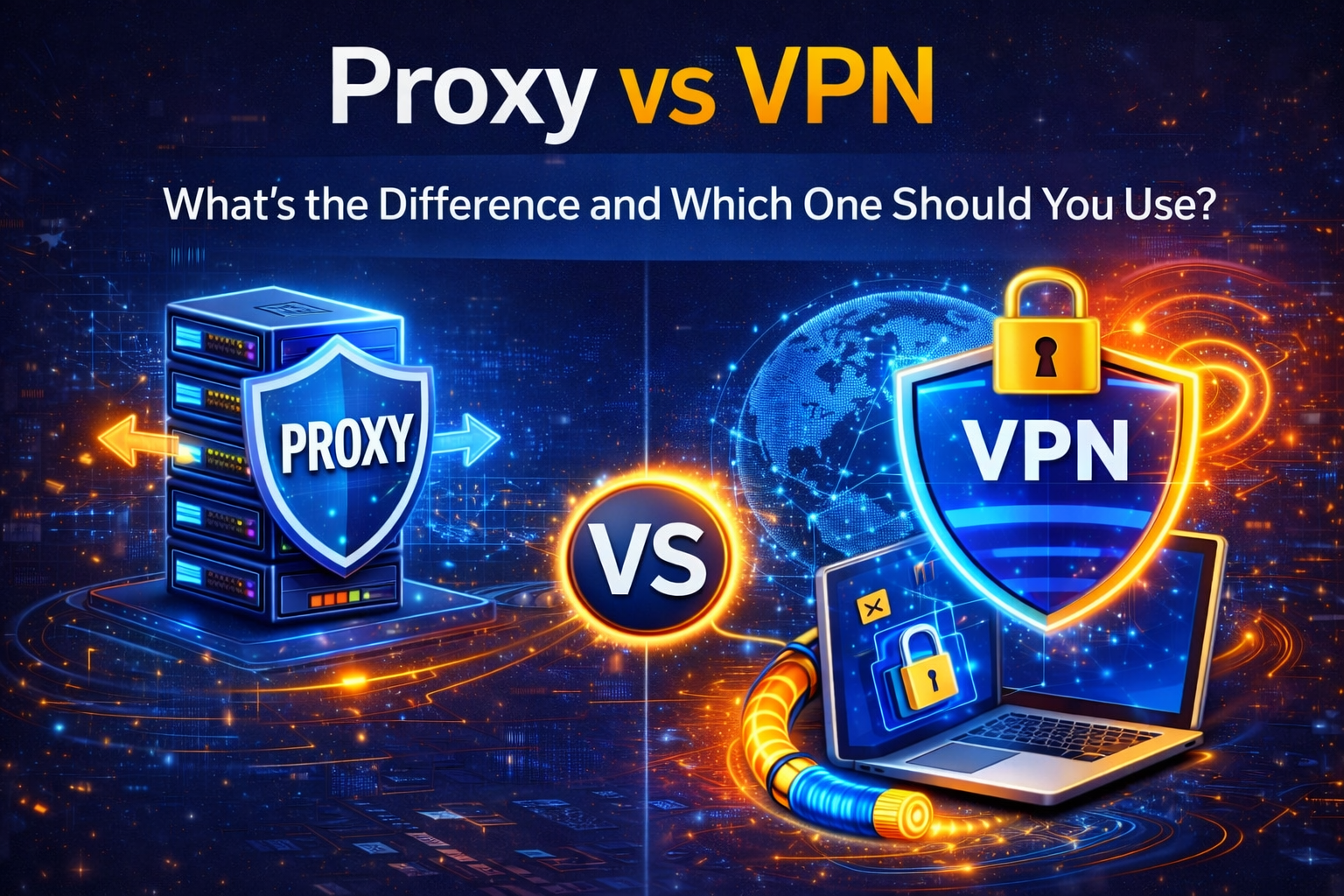
A proxy server acts as a middleman between your device and the internet. When you visit a website using a proxy, your request is first sent to the proxy server. The proxy then forwards your request to the website and sends the response back to you.
This process helps hide your original IP address, making it appear as if the request is coming from a different location.
Proxy servers are commonly used for:
- Accessing blocked websites
- Changing virtual location
- Basic privacy protection
- Faster browsing through caching
However, most proxy servers do not encrypt your data, which means your internet activity can still be monitored by hackers or network providers.
What is a VPN?
A VPN (Virtual Private Network) is a more advanced privacy tool. It creates a secure encrypted tunnel between your device and the internet. This encryption ensures that your online activity remains private and protected from cyber threats.
When you connect to a VPN server, your real IP address is hidden, and all your internet traffic is routed through the VPN server.
VPNs are widely used for:
- Secure browsing on public Wi-Fi
- Protecting sensitive data
- Online anonymity
- Streaming geo-restricted content
- Avoiding tracking and surveillance
Because VPNs use strong encryption, they offer a much higher level of security compared to proxy servers.
Key Differences Between Proxy and VPN
1. Security Level
The biggest difference between a proxy and a VPN is security. Proxy servers generally do not encrypt your data. They only mask your IP address.
VPNs, on the other hand, use advanced encryption protocols. This makes them ideal for protecting personal and financial information.
2. Privacy Protection
While both tools help hide your IP address, VPNs provide better privacy protection. A VPN encrypts all internet traffic from your device, whereas proxies may only work within a specific browser or application.
3. Speed and Performance
Proxy servers can sometimes offer faster speeds because they do not encrypt data. VPNs may slightly reduce speed due to encryption, but modern VPN services are optimized for performance.
4. Compatibility
VPNs work at the system level, which means they protect all apps and browsers on your device. Proxies usually need to be configured separately for each application.
5. Cost
Many proxy services are available for free. However, free proxies may not be reliable or secure. VPN services usually require a subscription, but they provide better performance and security.
When Should You Use a Proxy?
A proxy server is useful in situations where you need basic privacy or want to bypass simple restrictions.
You can use a proxy when:
- Accessing region-restricted websites
- Performing SEO research
- Managing multiple social media accounts
- Testing website performance from different locations
However, you should avoid using proxies for sensitive activities such as online banking or business communication.
When Should You Use a VPN?
A VPN is the best choice when security and privacy are your top priorities.
You should use a VPN when:
- Connecting to public Wi-Fi networks
- Protecting personal data
- Downloading files securely
- Streaming global content
- Avoiding tracking by advertisers
VPNs are also recommended for remote workers and travelers who need safe internet access.
Proxy vs VPN – Which One is Better?
There is no single answer because it depends on your needs. If you only want to hide your IP address and access blocked websites, a proxy server may be enough.
But if you want complete online security, encryption, and privacy protection, a VPN is clearly the better option.
For most modern internet users, VPN services are becoming the preferred solution because of rising cyber threats and data tracking concerns.
Final Thoughts
Understanding the difference between proxy servers and VPNs is important for making the right choice. Both tools help improve online privacy, but they serve different purposes.
A proxy server is suitable for simple tasks like bypassing restrictions and changing location. A VPN provides comprehensive protection by encrypting your data and securing your connection.
If you want safe and anonymous browsing, investing in a reliable VPN service is a smart decision. On the other hand, proxies can still be useful for lightweight browsing and testing purposes.
By choosing the right tool, you can enjoy a safer and more private internet experience.