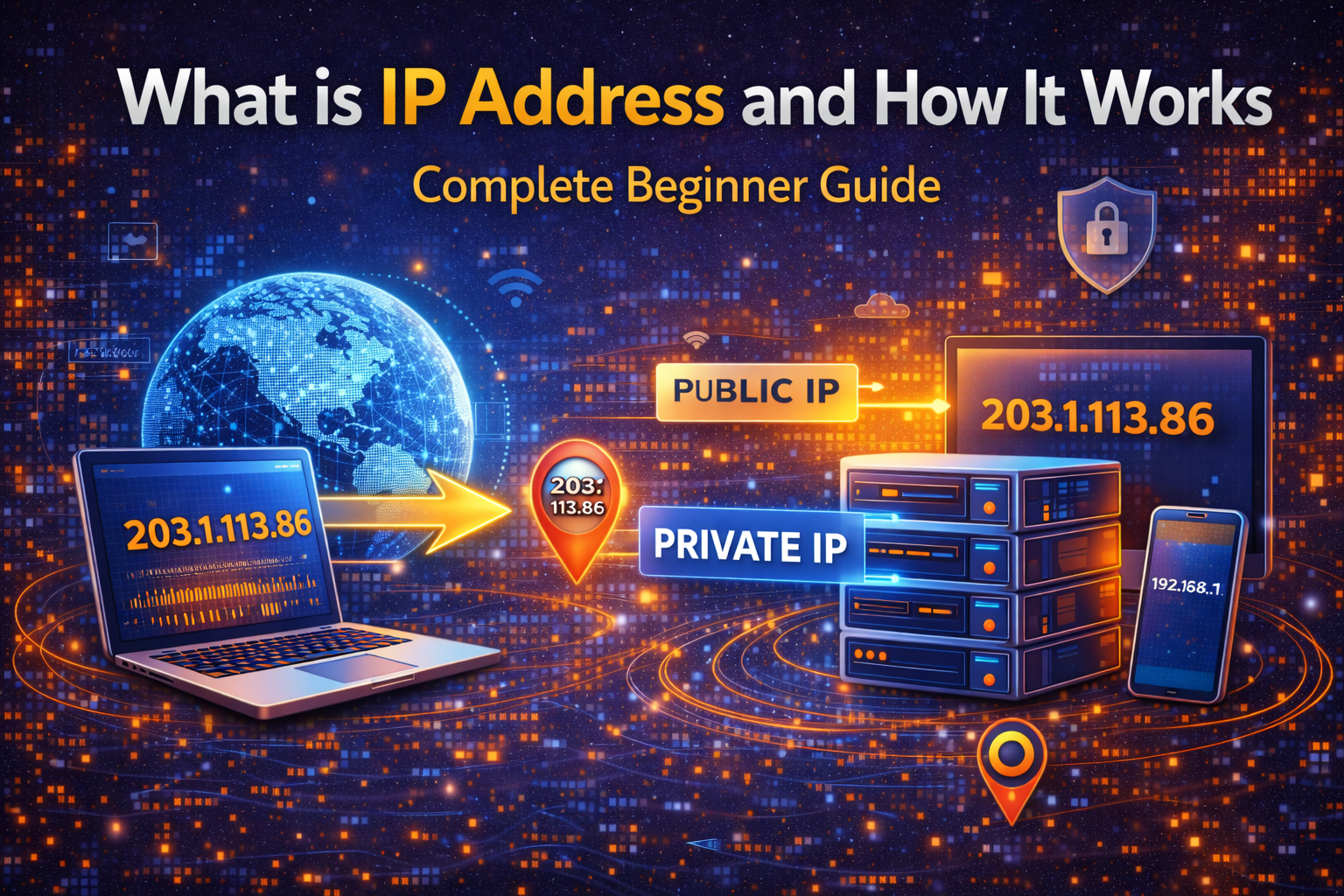
What is IP Address and How It Works – Complete Beginner Guide
In today’s internet-driven world, every device connected to the internet needs a unique identity. This identity is known as an IP address. Whether you are browsing websites, watching videos, or using social media, your device uses an IP address to communicate with servers around the world.
In this beginner guide, you will learn what an IP address is, how it works, its types, and why it is important for online privacy and internet security.
What is an IP Address
An IP address stands for Internet Protocol Address. It is a unique numerical label assigned to every device connected to a network that uses the internet protocol for communication.
Just like your home address helps people find your house, an IP address helps computers and servers find your device on the internet.
Without IP addresses, devices would not be able to send or receive data online.
How IP Address Works
When you enter a website address in your browser, your device sends a request to the website server. This request includes your IP address so the server knows where to send the response.
The server then sends website data back to your IP address, allowing the page to load on your screen.
This process happens within seconds and is repeated every time you browse online.
Types of IP Address
There are different types of IP addresses used for various purposes.
Public IP Address
This is the IP address assigned by your internet service provider. It is visible on the internet and can be used to identify your general location.
Private IP Address
This IP is used inside a local network such as your home WiFi. It helps devices communicate with each other within the same network.
Static IP Address
A static IP address remains the same over time. Businesses and servers often use static IP for reliability.
Dynamic IP Address
Most home users get dynamic IP addresses. These change periodically and provide better privacy.
Why IP Address is Important
IP addresses are essential for internet communication. Some key benefits include:
- Helps devices connect and communicate
- Enables data transfer between networks
- Supports online services and applications
- Helps improve network management
- Allows location-based services
Without IP addresses, the internet would not function properly.
Can Someone Track Your IP Address
Yes, websites and online services can see your public IP address. They can use it to detect your country, city, or internet provider.
However, they cannot easily see your exact home address.
To improve privacy, many users use VPN services or proxy servers to hide their real IP address.
How to Protect Your IP Address
If you want better online privacy, you can take some simple steps:
- Use a trusted VPN service
- Avoid clicking unknown links
- Keep your devices updated
- Use firewall and antivirus
- Avoid public WiFi for sensitive tasks
These practices help reduce the risk of tracking and cyber threats.
Conclusion
An IP address is a fundamental part of how the internet works. It allows devices to communicate, transfer data, and access online services.
Understanding IP addresses helps you stay more aware of online privacy and security risks. By using safe browsing practices and privacy tools, you can protect your digital identity in today’s connected world.