
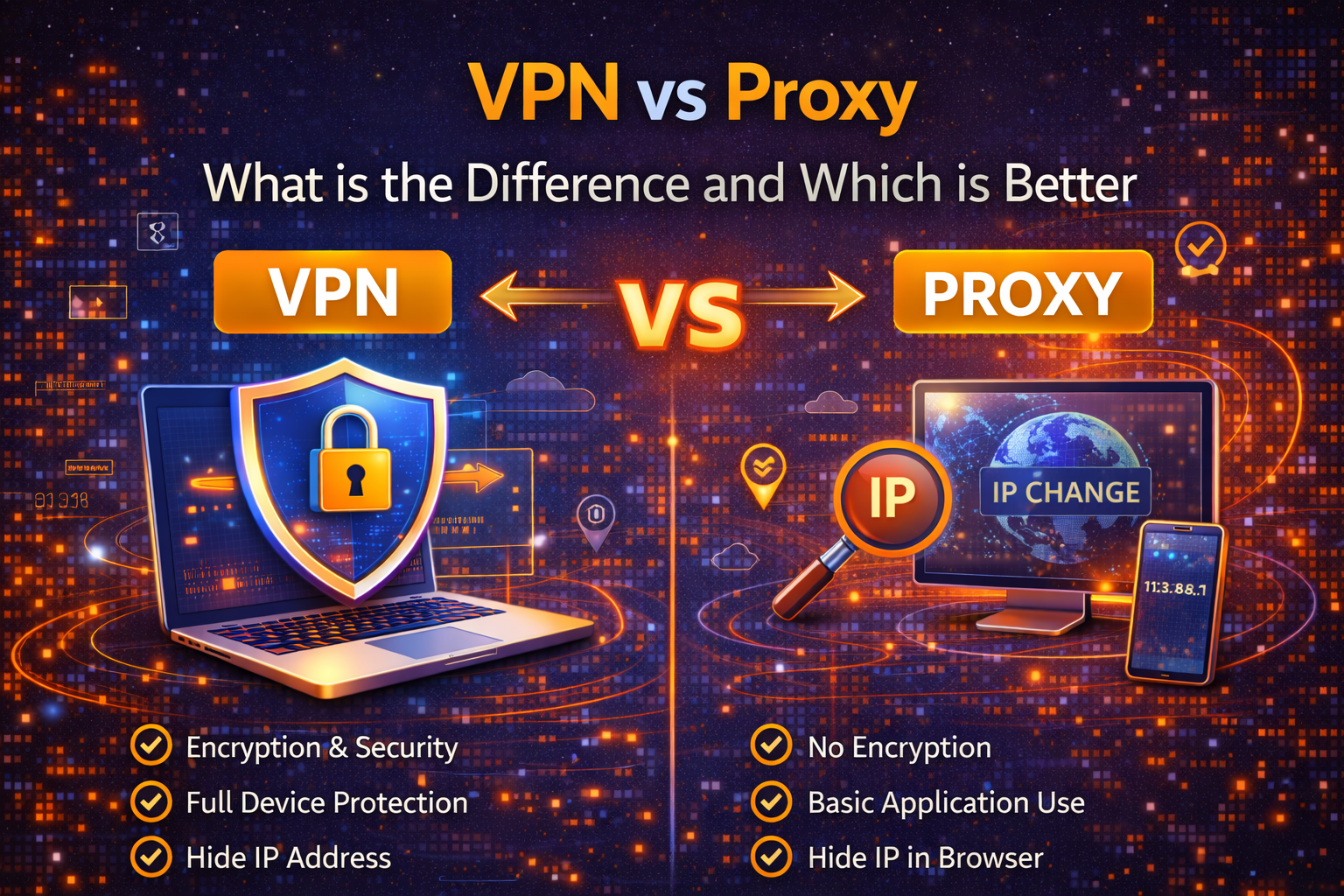
VPN vs Proxy – What is the Difference and Which is Better
Many internet users today want to protect their online privacy and access restricted content. Two common tools used for this purpose are VPN and Proxy. Beginners often get confused between these two technologies and do not understand which one is better for their needs.
In this guide, we will explain the difference between VPN and Proxy, how they work, their benefits, and when you should use each option.
What is a VPN
A VPN stands for Virtual Private Network. It creates a secure and encrypted connection between your device and the internet. When you use a VPN, your internet traffic passes through a private server before reaching the website you want to visit.
This process hides your real IP address and protects your online activity from hackers, trackers, and internet service providers.
VPN is widely used for secure browsing, online privacy, and safe use of public WiFi networks.
What is a Proxy Server
A proxy server works as a middle layer between your device and the internet. When you use a proxy, your request goes to the proxy server first, and then the proxy forwards it to the website.
The website sees the proxy server’s IP address instead of your real IP. This helps users access blocked websites and maintain basic privacy.
However, proxy servers usually do not encrypt your internet traffic.
Key Differences Between VPN and Proxy
Understanding the main differences between VPN and Proxy can help you choose the right option.
Security
VPN provides strong encryption and better protection from cyber threats. Proxy offers basic privacy but limited security.
Speed
Proxy servers are sometimes faster because they do not use encryption. VPN may slightly reduce speed due to security layers.
Privacy
VPN hides your full internet activity. Proxy only hides IP address for specific applications or browsers.
Coverage
VPN protects your entire device including apps and system connections. Proxy usually works only in a browser or selected software.
When Should You Use VPN
You should use a VPN in the following situations:
- Using public WiFi networks
- Accessing sensitive accounts or banking
- Protecting personal data
- Avoiding online tracking
- Streaming or downloading securely
VPN is best for users who want full privacy and strong internet security.
When Should You Use Proxy
Proxy can be useful in simple situations such as:
- Accessing geo-restricted websites
- Changing IP address quickly
- Basic anonymous browsing
- Testing websites from different locations
Proxy is suitable for light tasks that do not require strong security.
VPN vs Proxy – Which is Better
Both VPN and Proxy have their own advantages. If your main goal is privacy and security, VPN is the better option. It provides encrypted protection and safeguards your data from cyber threats.
If you only want to bypass website restrictions or hide your IP temporarily, a proxy server can be enough.
For complete online safety, many experts recommend using VPN instead of proxy.
Conclusion
VPN and Proxy are useful tools for improving internet privacy and accessing restricted content. However, they are not the same.
VPN offers better security, full device protection, and encrypted browsing. Proxy provides basic anonymity and faster connection for simple tasks.
Understanding these differences helps you choose the right solution based on your internet needs and security level.