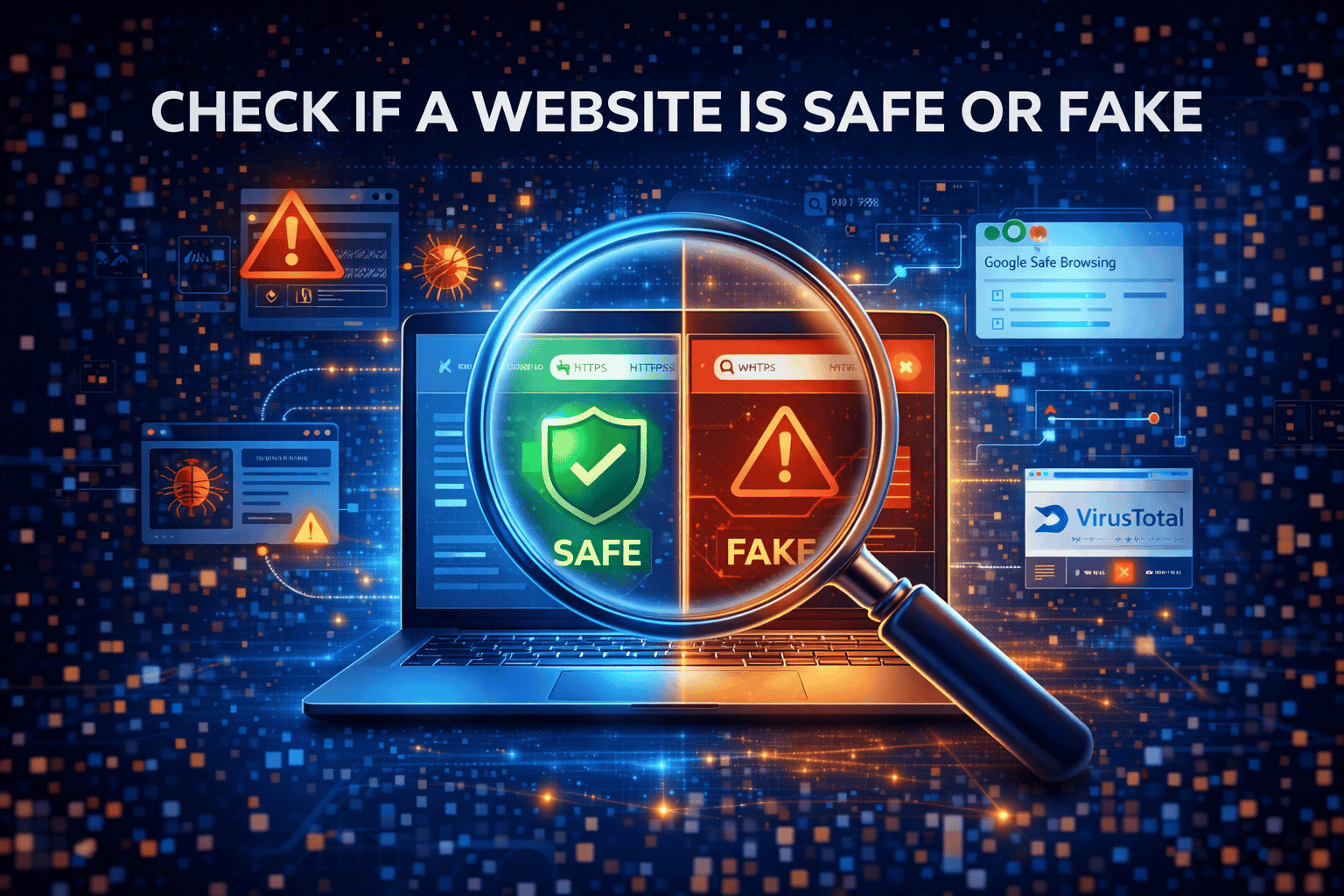
In today’s internet world, thousands of new websites are created every day. While many of them are genuine, some are designed to scam users, steal data, or spread malware. Knowing how to check if a website is safe or fake is an essential skill for every internet user.
Many people fall victim to phishing websites, fake shopping stores, and scam pages simply because they cannot identify warning signs. This guide will help you understand how to recognize unsafe websites and protect yourself online.
Check Website Safety
Why Website Safety is Important
Check Website Safety
Every time you visit a website, you may share sensitive information such as:
- Login credentials
- Email address
- Payment details
- Personal data
- Check Website Safety
If the website is not secure, this information can be stolen and misused.
Unsafe websites can lead to:
- Identity theft
- Financial fraud
- Malware infection
- Account hacking
That is why checking website safety before interacting is very important.
Common Types of Fake Websites
Understanding different types of scam websites helps you stay alert.
1. Phishing Websites
These websites look exactly like real ones but are designed to steal login details.
Example:
Fake banking login pages.
2. Fake Shopping Websites
These offer extremely low prices to attract users but never deliver products.
3. Malware-Infected Websites
Some sites automatically download harmful files to your device.
4. Clone Websites
These copy the design of popular websites to trick users.
Signs That a Website is Safe
Before using any website, check these indicators:
HTTPS Security
Safe websites use HTTPS instead of HTTP.
👉 Look for:
🔒 Lock icon in browser
Domain Name Check
Check if the domain name is correct.
Check Website Safety
Example:
real: amazon.com
fake: amaz0n-sale.com
Professional Design
Legitimate websites usually have:
- Clean layout
- Proper grammar
- Working links
Contact Information
A real website provides:
- Address
- Contact page
Signs That a Website is Fake
Too Good to Be True Offers
Huge discounts or free products are often scams.
Popups and Redirects
Too many ads and redirects indicate unsafe websites.
Poor Grammar
Fake websites often contain spelling mistakes.
No Privacy Policy
Legitimate websites always have legal pages.
Tools to Check Website Safety
You can use online tools to verify websites.
Google Safe Browsing
Shows if a website is dangerous.
VirusTotal
Scans website URLs for malware.
WHOIS Lookup
Checks domain registration details.
How to Protect Yourself Online
Follow these simple tips:
- Never enter sensitive data on unknown sites
- Use strong passwords
- Enable two-factor authentication
- Avoid clicking suspicious links
- Keep browser updated
Role of Antivirus and Browser Security
Modern browsers and antivirus software can detect unsafe websites automatically.
They provide:
- Warning alerts
- Blocking malicious sites
- Safe browsing features
What to Do If You Visit a Fake Website
If you suspect a site is fake:
- Close the page immediately
- Do not enter any information
- Run antivirus scan
- Change passwords if needed
- Check Website Safety
Final Thoughts
The internet is full of opportunities, but it also has risks. Learning how to check website safety can protect you from scams, fraud, and cyber threats.
Always stay alert, verify websites before trusting them, and use security tools to stay safe online.
Remember — a few seconds of checking can save you from major problems.