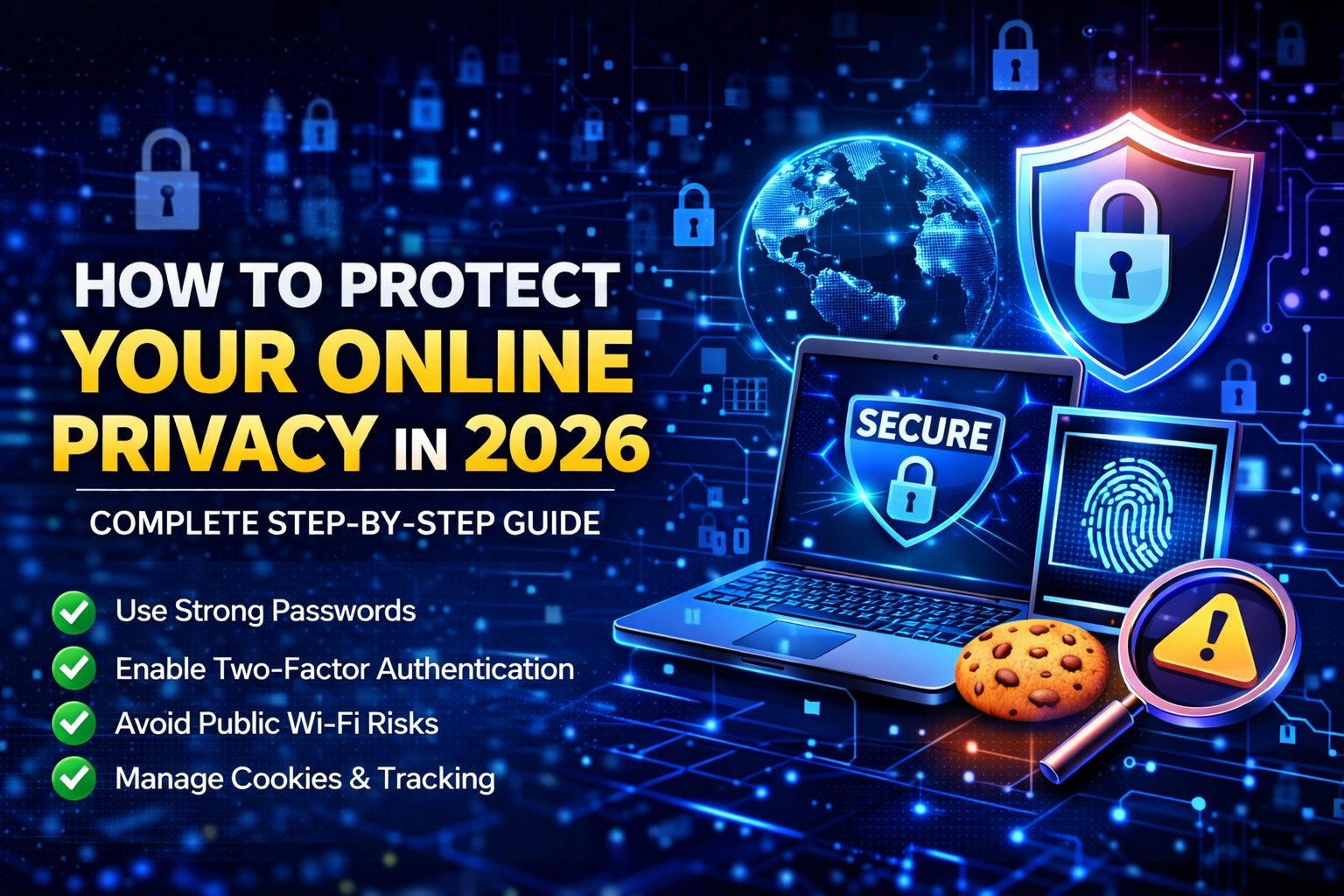
In today’s digital world, protecting your online privacy has become more important than ever. Every time you browse the internet, use social media, shop online, or download an app, your personal data can be tracked, collected, and sometimes misused.
With increasing cyber threats and data leaks, internet users must understand how to stay safe online. Whether you are a beginner or a regular internet user, learning the basics of online privacy protection can help you avoid scams, identity theft, and unnecessary tracking.
In this complete guide, you will learn practical and simple steps to protect your online privacy in 2026.
🔎 Why Online Privacy Matters Today
Many people think they have nothing to hide, so privacy is not important. But in reality, your online data is extremely valuable. Companies collect browsing habits, location data, search history, and even device information to build your digital profile.
Hackers and cybercriminals can misuse this data for fraud, phishing attacks, or identity theft. Even targeted ads and tracking cookies can reduce your browsing freedom.
Protecting your privacy helps you:
- Keep personal information secure
- Avoid online scams and fraud
- Prevent tracking and profiling
- Enjoy safer internet browsing
- Maintain digital independence
🌐 Understand What Data Websites Collect
Before protecting privacy, you must understand what kind of data websites collect.
Most websites track:
- IP address
- Device information
- Browser type
- Location data
- Search queries
- Cookies and session data
This tracking is often used for analytics and advertising. However, excessive data collection can harm your privacy.
Always read privacy policies and be aware of what permissions you allow.
🔐 Use Strong and Unique Passwords
Weak passwords are one of the biggest reasons for hacked accounts. Many users still use simple passwords like “123456” or “password”.
To improve security:
- Use long passwords (12+ characters)
- Combine letters, numbers, and symbols
- Avoid using personal details
- Use different passwords for each account
You can also use a password manager to store and generate secure passwords.
🛡️ Enable Two-Factor Authentication (2FA)
Two-factor authentication adds an extra layer of protection. Even if someone knows your password, they cannot access your account without a verification code.
Popular 2FA methods include:
- SMS verification
- Email verification
- Authenticator apps
- Security keys
Always enable 2FA on important accounts like email, banking, and social media.
🧭 Browse Using Privacy-Focused Browsers
Not all browsers provide the same level of privacy. Some browsers collect usage data, while others focus on user security.
Privacy-focused browsers help block trackers, ads, and fingerprinting attempts. They also provide built-in security features.
Regularly update your browser and avoid installing unknown extensions.
🍪 Manage Cookies and Tracking Settings
Cookies are small files stored by websites to remember your preferences. While useful, they can also track your browsing behavior across multiple sites.
To stay safe:
- Clear cookies regularly
- Block third-party cookies
- Use private browsing mode
- Adjust browser privacy settings
This simple step can reduce online tracking significantly.
📶 Avoid Public Wi-Fi Risks
Public Wi-Fi networks in cafes, airports, or malls are convenient but risky. Hackers can intercept data on unsecured networks.
When using public Wi-Fi:
- Avoid online banking or payments
- Use secure websites (HTTPS)
- Disable automatic connections
- Turn off file sharing
If possible, use mobile data for sensitive tasks.
📱 Control App Permissions on Your Device
Many mobile apps request unnecessary permissions like location, contacts, microphone, or storage access.
Review app permissions regularly and disable anything not required.
Uninstall apps you no longer use. This reduces background tracking and improves device performance.
📧 Stay Alert from Phishing and Fake Links
Cybercriminals often use fake emails, messages, or websites to steal personal data.
Signs of phishing include:
- Urgent messages asking for login details
- Suspicious links
- Unknown attachments
- Poor grammar or fake branding
Always verify the sender before clicking links or sharing information.
🔄 Keep Software and Devices Updated
Updates are not just about new features — they also fix security vulnerabilities.
Always update:
- Operating system
- Browser
- Apps
- Security software
Enable automatic updates whenever possible.
🧠 Build Safe Internet Habits
Online privacy protection is not only about tools — it is also about awareness and habits.
Good digital habits include:
- Thinking before sharing personal info
- Using secure payment methods
- Logging out from shared devices
- Checking website authenticity
Small changes in behavior can make a big difference in online safety.
🚀 Future of Online Privacy
As technology evolves, privacy challenges will continue to grow. AI tracking, smart devices, and data-driven advertising are shaping the digital world.
Users must stay informed and adapt to new security practices. Governments and tech companies are also improving privacy regulations, but personal responsibility remains essential.
Learning and applying privacy protection steps today will help you stay secure in the future.
✅ Final Thoughts
Protecting your online privacy in 2026 is not difficult if you follow the right steps. By using strong passwords, enabling extra security, managing cookies, and staying alert online, you can reduce risks significantly.
The internet should be a safe space for learning, working, and entertainment. With proper awareness and smart habits, you can enjoy the digital world without compromising your personal data.
Start applying these tips today and take control of your online privacy.