Introduction
In today’s digital world, online privacy and security have become more important than ever. Millions of users are now turning to VPN services to protect their personal data, browse anonymously, and access restricted content. However, one common question that many beginners ask is — “Is free VPN safe to use?”
At first glance, free VPN services look like a perfect solution. You can download an app, connect to a server, and start browsing anonymously without paying anything. But the reality is more complex. Free VPNs come with both advantages and risks that users must understand before using them.
In this detailed beginner-friendly guide, we will explain how free VPNs work, their benefits, hidden dangers, and whether you should trust them in 2026.
What is a Free VPN?
A free VPN is a virtual private network service that allows users to connect to secure servers without paying subscription fees. Just like paid VPN services, free VPNs encrypt your internet traffic and hide your IP address.
When you connect to a VPN server, your real location is masked and websites see the VPN server’s IP address instead of yours. This helps in improving privacy and bypassing geo-restricted content.
Many free VPN apps are available on Android, iOS, Windows, and browser extensions. Popular free VPN providers attract millions of downloads because they promise privacy, speed, and unlimited access — all for free.
But the key question is — how do they make money?
How Free VPNs Earn Money
Running VPN servers and maintaining infrastructure costs money. Since free VPN providers do not charge users directly, they use other methods to generate revenue.
Here are the most common ways free VPNs make money:
1. Showing Ads
Many free VPN apps display ads while you are browsing or inside the application. These ads generate revenue for the VPN provider.
2. Selling User Data
Some free VPN companies collect browsing data, location details, and usage behavior, which may be shared with advertisers or third parties.
3. Freemium Model
Some VPN providers offer limited free plans and encourage users to upgrade to paid premium plans for better speed and features.
4. Bandwidth Sharing
In certain cases, free VPN services may use your internet connection as part of a peer-to-peer network.
This is why users must always read privacy policies before using any VPN service.
Benefits of Using Free VPN
Free VPNs are not completely bad. They can be useful in many situations, especially for beginners.
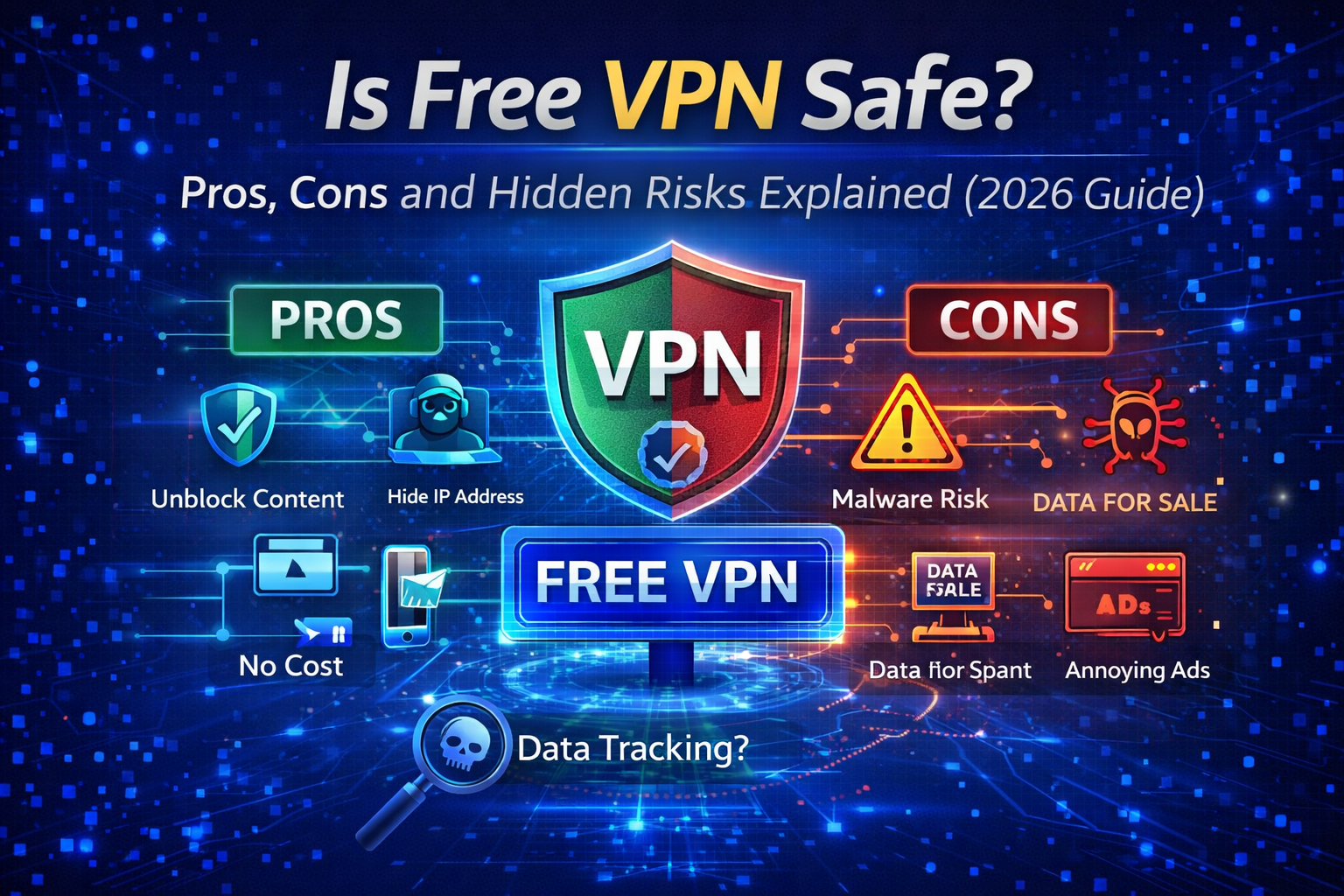
✔ No Cost
The biggest advantage is that users can protect their internet connection without spending money.
✔ Easy to Use
Most free VPN apps have simple interfaces. Even non-technical users can connect with one click.
✔ Access Blocked Content
Free VPNs help users access region-restricted websites and streaming platforms.
✔ Basic Privacy Protection
They can hide your IP address and prevent basic tracking from websites.
✔ Useful for Testing
Beginners can test VPN features before deciding to buy a premium subscription.
Hidden Risks of Free VPN
While free VPN services sound attractive, they also come with serious drawbacks.
⚠ Slow Internet Speed
Free VPN servers are often overloaded because many users connect at the same time. This can reduce browsing speed and cause buffering during streaming.
⚠ Limited Server Locations
Most free VPN plans provide only a few server options, reducing flexibility.
⚠ Weak Security
Some free VPN apps use outdated encryption or may leak user data.
⚠ Data Logging
Certain providers store browsing logs, which defeats the purpose of using a VPN.
⚠ Malware and Fake Apps
Many fake VPN apps on app stores contain malware or intrusive trackers.
⚠ Annoying Advertisements
Frequent ads can interrupt browsing and reduce user experience.
When Should You Use Free VPN?
Free VPN can be useful in the following situations:
- Accessing blocked websites occasionally
- Using public Wi-Fi for basic protection
- Testing VPN features before buying
- Light browsing and casual usage
However, they are not recommended for:
- Online banking
- Business communication
- Torrenting or downloading
- Streaming high-quality content
- Handling sensitive personal data
Free VPN vs Paid VPN
Understanding the difference between free and paid VPN is important.
| Feature | Free VPN | Paid VPN |
|---|---|---|
| Speed | Slow | Fast |
| Security | Basic | Strong encryption |
| Server Locations | Limited | Global servers |
| Ads | Yes | No |
| Data Privacy | Risky | Better protection |
| Streaming Support | Limited | HD & Stable |
Paid VPN services invest in better infrastructure and security technology, making them more reliable for long-term use.
Tips to Choose a Safe Free VPN
If you still want to use a free VPN, follow these safety tips:
- Choose VPN apps with good reviews and ratings
- Read privacy policy carefully
- Avoid unknown or newly launched VPN apps
- Do not allow unnecessary permissions
- Use antivirus protection on your device
- Avoid entering sensitive data while connected
These steps can help reduce risks while using free VPN services.
Future of Free VPN in 2026
As cyber threats continue to grow, demand for privacy tools like VPN is increasing rapidly. Many companies are now improving their free plans to attract users.
However, users are also becoming more aware of privacy risks. Transparency, strong encryption, and ethical data policies will play a big role in the future of VPN services.
In 2026, experts suggest using free VPN only for basic tasks and switching to premium VPN for serious privacy protection.
Conclusion
Free VPN services can be helpful for beginners who want to explore online privacy tools without spending money. They offer basic protection, easy access to blocked content, and a simple browsing experience.
However, they also come with hidden risks such as slow speed, limited features, and possible data tracking. Users must stay cautious and choose trusted VPN providers.
If online security and privacy are your top priorities, investing in a reliable paid VPN service is always a safer choice.
Understanding both the advantages and disadvantages of free VPN will help you make the right decision for safe and secure internet browsing.