
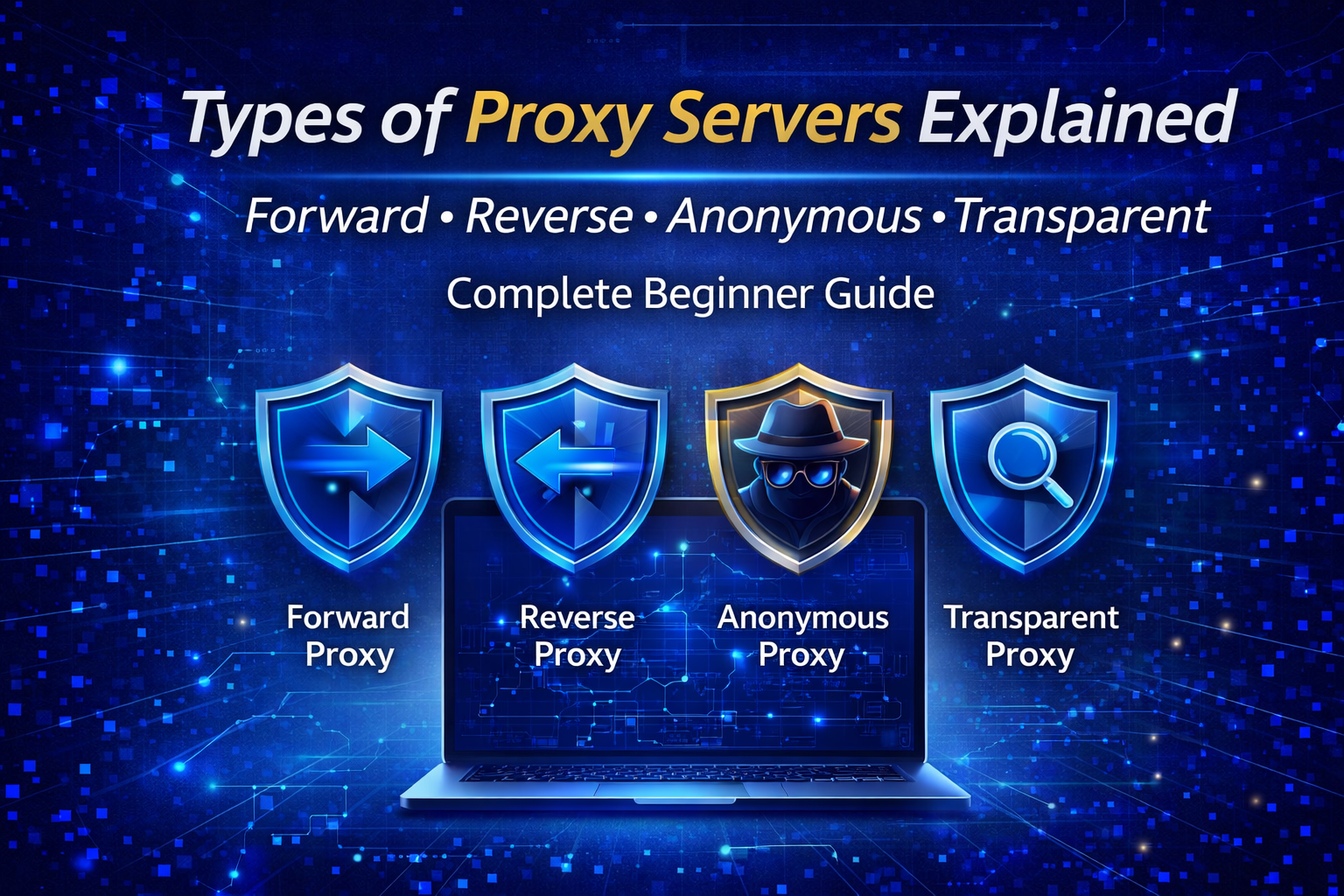
In today’s digital world, privacy and internet security have become extremely important. Millions of users browse websites daily without knowing that their online activities can be tracked. This is where proxy servers come into play. A proxy server acts as a middleman between your device and the internet, helping to hide your real IP address and improve browsing security.
However, many beginners do not know that there are different types of proxy servers available. Each type works in a unique way and is used for different purposes such as privacy protection, content filtering, faster website access, and cybersecurity.
In this detailed beginner guide, we will explore the major types of proxy servers, how they work, and when you should use them.
What is a Proxy Server?
A proxy server is an intermediary system that processes your internet requests. When you visit a website using a proxy, your request first goes to the proxy server. The proxy then forwards the request to the website and sends the response back to you.
Because of this process, the website sees the proxy server’s IP address instead of your real IP. This helps users stay anonymous online and access region-restricted content.
Proxy servers are widely used by individuals, companies, schools, and cybersecurity professionals.
Forward Proxy Server
A forward proxy is the most common type of proxy used by regular internet users. It sits between the client (user) and the internet.
When a user connects to a forward proxy, all browsing requests pass through it before reaching the target website.
Key Features of Forward Proxy
- Hides user IP address
- Helps access blocked websites
- Improves browsing privacy
- Used for anonymous surfing
Example Use Case
If a website is blocked in your country, you can connect to a forward proxy located in another country. The proxy will access the website on your behalf.
Reverse Proxy Server
A reverse proxy works differently. Instead of protecting users, it protects web servers.
It sits in front of a website’s main server and manages incoming traffic from users.
Key Features of Reverse Proxy
- Improves website speed
- Protects against cyber attacks
- Helps load balancing
- Enhances website performance
Example Use Case
Large websites like e-commerce platforms use reverse proxies to manage heavy traffic and prevent server crashes.
Anonymous Proxy Server
An anonymous proxy hides your real IP address but still tells websites that you are using a proxy.
This provides moderate privacy protection.
Key Features
- Hides real IP
- Prevents tracking
- Allows private browsing
- Useful for basic anonymity
Example Use Case
Bloggers or researchers use anonymous proxies to gather information without revealing identity.
Transparent Proxy Server
A transparent proxy does not hide your IP address. It is mainly used by organizations and internet providers.
Users often do not even know they are connected to a transparent proxy.
Key Features
- Used for content filtering
- Improves network performance
- Saves bandwidth
- Monitors internet usage
Example Use Case
Schools and offices use transparent proxies to block social media or streaming sites.
types of proxy servers
High Anonymity Proxy
This is also known as elite proxy. It provides the highest level of privacy.
Websites cannot detect that you are using a proxy.
Key Features
- Maximum privacy protection
- Prevents advanced tracking
- Ideal for cybersecurity tasks
- Useful for sensitive research
Data Center Proxy vs Residential Proxy
Another classification of proxy servers depends on IP type.
Data Center Proxy
- Fast speed
- Cheap
- Not linked to real devices
Residential Proxy
- Uses real ISP IP addresses
- Harder to detect
- Better for scraping or marketing research
Advantages of Using Proxy Servers
- Protects personal privacy
- Helps access geo-restricted content
- Improves network security
- Saves bandwidth
- Controls internet usage
Limitations of Proxy Servers
- Some proxies are slow
- Free proxies may be unsafe
- Limited encryption compared to VPN
- Websites may block proxy IPs
Proxy vs VPN – Quick Difference
Many beginners confuse proxy servers with VPN services.
- Proxy hides IP for specific apps
- VPN encrypts entirm internet connection
For stronger security, VPN is usually better.
Final Thoughts
Understanding the different types of proxy servers is essential for anyone who wants better online privacy and internet control. From forward proxy to reverse proxy and anonymous proxy, each type has a specific role in modern networking.
Before choosing a proxy, always consider your purpose such as privacy, speed, security, or content access.
Using the right proxy can make your internet experience safer and more ad efficient.
types of proxy servers